Showing posts with label Tribe. Show all posts

Dani Tribe in Baliem Valley

Friday, September 30, 2011 0 comments

Baliem Valley and the Dani tribe waited a long time to be discovered. Highland Papua is one of the last areas to explore new Guinea. High in the mountains of West Papua (Irian Jaya), were generally considered uninhabited. In early 1398 the pilot, Richard Archbold was noted that there was something special deep inside, and a large valley located in a mountain of 4000 meters. The valley was clearly recognizable as fields, similar to those he knew in Europe. Baliem Valley and the Dani tribe came up with pure luck.

Baliem Valley, the life of the Dani tribe, is the most fertile part of the plain covers western New Guinea Island - Papua (Irian Jaya). Baliem Valley is located about 1,800 meters above sea level and is surrounded by a ridge mountians some of which reach up to 4500 m. There are also some fish Baliem River, which flows through the valley. Baliem Valley area is not large, about 60 × 30 km.


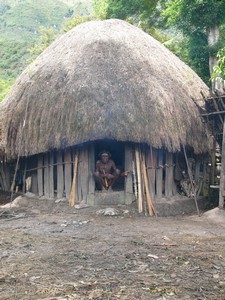
The first parachute mission, Loyd Van Stone, as late as 1954. Only then will the civilization of the Baliem valley, and Dani and Lani tribes begin. Since Baliem Valley was a gateway to explore the highlands of West Papua. No road has yet been built, but at a major airport Waman was built, and now supplies transported by cargo plane high. American Hercules planes trucks and construction equipment. Thank you now, could a vast network of paved roads ahead, brick houses were built, etc. Despite all these developments is the Baliem valley is still dominated by the thatched roofs of the tribe Dani.

Danis is an indigenous tribe that lived in the Baliem valley at the time of its discovery. Danis belong to some of the "decorative" tribes in West Papua.


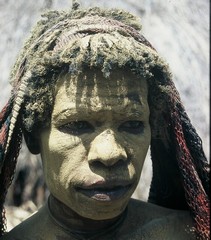
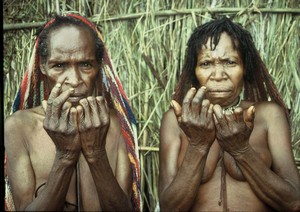
Their penchant for "fancy dress" shows most of the time of the war. You've probably seen the famous photo of the Dani tribe members, with boar's tusks in their noses, and hats with feathers Paradise. The men wear long, thin koteka Dani. The women wear short skirts Danis woven from fibers of orchids, decorated with straw and woven bags with essential called "noken" in the back. As women of the tribe Yali, women wear short skirts Dani under their butts.

Despite Danis were discovered relatively late - in 1938, became one of the best known tribes in New Guinea. Dani held one of the most fertile parts of Papua. As a result, they often had to fight for their territory. There were frequent wars among themselves Danis. They were the most formidable headhunters on the island tribe, which is even more remarkable when you consider that eat their enemies, like most of the tribes of Papua others did.


Dani build round or oval huts, and their villages are enclosed by fences. They are farmers, and their small fields are distinctly bordered. This is what helped Richard Archbold spot them from the plane. The Dani tribe’s customs and culture are very rich and interesting. Several pages could be written on these topics.
His penchant for "dress" the majority of the sample in time of war. You've probably seen the photos of the famous members of the Dani tribe, with boar tusks in their noses, and hats with feathers of birds of paradise. The men wear long, thin koteka Dani. Danis The women wear short skirts woven from fibers of orchids adorned with woven straw and bags key called "noken" on the back. As women Yali tribe, the Dani women wear short skirts below their buttocks.

Despite the fact that Danis was discovered relatively late - in 1938, became one of the most famous tribes in New Guinea. Dani on a fertile part of Papua. As a result, often had to fight for their territory. There was also a frequent wars between them Danis. They were the most feared headhunting tribes of the island, which is all the more, if we do not eat their enemies, like most other tribes have made Papua.


Nias Island

0 comments

Located 125 km onshore Sumatra, the island of Nias is famous for its' megalith altars, spectacular traditional architecture and the complexity of religious sites. This isolated island possession on undulating terrain of mountains, valleys, gorges and rivers. North of this island is sparsely populated.

The local call their land as Tano Niha or "land of the people" as they are called the same as Ono Noha. Nias ethnic they are involved in the ethnic-Malay Ptoto, again obtained with the Asian Proto-Mongolian world. Nias speak a kind of language related to Madagascar. Because of the similarity of language, customs, the body size of Batak of Sumatra Nias with the mainland, it is possible that the island of Nias has derived Batak.

According to customary law, there are three classes of Nias, namely the aristocracy, ordinary people and slaves. The number of owned ointments, which represents the social status of a family. People used to be scarred for a particular purpose. A young man must serve the family of his future wife for some time before the wedding.

War as a dance in South Nias, Indonesia is only a highly qualified dance performing acrobatic jumps. The Warrior Dance is a mesmerizing dance song scary voice rattling shields, men shouted, jumping like a frog in the air. Niasers also perform mock battles and armed struggle. They receive a horned helmet, shoulder boards flaring, boar tusk protruding facial mask, a double-edged sword, sharp spears to hit the enemy physiologically.

A culture of Nias, which still exists is the jumping rock, or locally called fahombe. Fahombe performed according prove beyond a man to his wife. The man had to jump over a stone table two meters high. In the past, the top of the stone table is covered with spikes and sharp bamboos. Tactically, this stone jumping also means educating young warrior facing the wall of their enemy with a torch in one hand a sword in the other night. Pierre jumps ever conducted in villages in South Nias.


Nias attractions has many historical remains and unique culture to enjoy. Megalithic stone unique clan houses, and their war dance are among the attractions. The environment is the car offers a challenge to ride a wave on the planet.


Navigating the best time to surf Nias is from June to October with the biggest swells, but the rest of the year is ideal for those who want smaller waves.

NIAS has one of the best right-handed in Indonesia. It is located at the western end of the bay and can hold up lagundi 15 feet. There is also an excellent left reef break that works for more than four feet. If you are looking for hollow, deep waves of Nias is definitely worth a visit. There are also many other places to explore like the Hinako Islands.

SIBERUT ISLANDS

0 comments

Siberut island recently received international attention on the primary conservation area, and the unique culture of ethnic Mentawaian endemicity and its bio-diversity must be maintained. Although the island has much to offer, the possibilities are not fully exploited, particularly for tourism.

Most visitors to the island is only interested in seeing the culture of indigenous tribes such as the common life in the clan of the traditional house UMA along the bank.

Siberut National Park occupies the western half of the island's north coast. Today, biodiversity conservation integrated project, organized by PHPA, Ministry of Finance, in collaboration with local communities, local NGOs and other institutions, conducts the program of community-based conservation.

Siberut Island (4.030 km ²) is the largest island in the archipelago of four islands Mentawaian. It is located about 155 km from the west coast of Sumatra, the Straits of all Mentawaian. Mentawaian islands belong administratively Kabupaten (Regency), Padang Pariaman in the province of West Sumatra. Siberut is divided into two Kecamatan (district): North and South centers Muara Siberut and Muara Siberut administrative Sikabaluan who is also a service to the market centers of Siberut.

According to the Forestry Ministerial Decree (No. 407/Kpts II/93 dated 10-VII-93), an area of ​​190,500 hectares was declared Siberut National Park in 1993.

TOPOGRAPHY AND CLIMATEThe Siberut Island is characterized by a wet equatorial climate, with minimum and maximum temperatures of 22 ° C (71.6F) and 31 ° C (87.8F). The dry season is from February to June and the rainy season is from July to January. Siberut is hilly with steep slopes. Almost 60% is covered by tropical forests, many forest types, such as: primary dipterocarp forest, primary forest, mixed forest swamps, mangroves and Barringtonia. In addition, many rivers in the islands with a complex system of tributaries.

PLACES OF INTEREST INTERESTSome and interesting things to see are:

Community and Culture: Although Siberut is only a small island, the internal variations in language, culture, lifestyle, and resources is very important. There is no clear indication of when man first arrived on Siberut, but suggest that the anthropologist Batak of North Sumatra settled in the island several thousand years. In many ways, the people of Siberut are among the most archaic in Indonesia.

Mentawaian patrineal groups are traditionally organized and social life around the house along the municipal UMA, which took place in the clan of people related through a common ancestor. UMA size varies between 30-80 members, who are in nuclear family units called LALEP. Since the internal friction, the clan may be divided to form a new group or a single family.

Mentawaians believe that all living objects, men, animals and plants are presumably life. Only the expert community is a sorcerer, Kerea, responsible for communication with the spirits and souls. In case of accident or illness, is called to restore harmony in a group or in relation to the spirits of the environment. Taboo to develop a system based on religious beliefs in relation with the environment is the dominant feature of traditional life in Siberut.

Visit and stay in a village Mentawai walk in the forest, see the treatment and processing of barkcloth of sago, and other activities that increase the interest and fascination with the natural philosophy of Mentawaians.

Jungle Adventure: very few visitors have explored the island densely Fresta. Inside the national park adventures pleasant surprises await the visitor. Visit a cave in central Siberut or waterfalls in the north and south of the island, are available upon request from your guide. Be aware of your surroundings. You may have the opportunity to see and hear some fauna. Siberut has four endemic primates in the local names are called Bilu (Hylobates Kloss) Simakobu (Simi concolor), Bokoi (Macaca pagensis) and Joja (Presbytis Potenziani). There are at least five species of squirrels and birds abound in the island. Fill a canoe ride on muddy trails shippery balanced on a log, wading a shallow river, brushing through a dense jungle - are all part of an unforgettable adventure in the jungle of Siberut.

Siberut island recently received international attention on the primary conservation area, and the unique culture of ethnic Mentawaian endemicity and its bio-diversity must be maintained. Although the island has much to offer, the possibilities are not fully exploited, particularly for tourism.

Most visitors to the island are only interested in seeing the culture of the indigenous tribes, as the community life of the clan in a traditional house of the river along the UMA.

Siberut National Park is located in the western part of the 'island of the coast. At the time, took the conservation of biodiversity, organized by PHPA, MOF together with local authorities, local NGOs and other institutions, will make the Community-based conservation program.

Siberut Island (4.030 km ²) is the largest island in the archipelago of four islands Mentawaian. It is located about 155 km from the west coast of Sumatra, the Straits of all Mentawaian. Mentawaian islands belong administratively Kabupaten (Regency), Padang Pariaman in the province of West Sumatra. Siberut is divided into two Kecamatan (district): North and South centers Muara Siberut and Muara Siberut administrative Sikabaluan who is also a service to the market centers of Siberut.

According to the Decree of the Ministry of Forestry (No 407/Kpts II/93, dated 10-VII-93), 190 500 hectares of area has been declared Siberut National Park in 1993.

Topography and CLIMATEThe Siberut Island is characterized by a wet equatorial climate, with minimum and maximum temperature of 22o C (71.6F) and 31 ° C (87.8F). The dry season is from February to June and the rainy season is from July to January. Siberut is hilly with wide variations in height. Nearly 60% is covered by tropical forest with many forest types such as: primary dipterocarp forest, primary forest mixed swamp forest, mangrove forest and Barringtonia. There are many rivers on the islands with a complex system of tributaries.

PLACES INTERESTSome interesting objects to see are:

Community and Culture: Although Siberut is only a small island, the internal variations in language, culture, lifestyle, and resources is very important. There is no clear indication of when man first arrived on Siberut, but suggest that the anthropologist Batak of North Sumatra settled in the island several thousand years. In many ways, the people of Siberut are among the most archaic in Indonesia.

The Mentawai are traditionally organized in the life of social groups and patrineal around the UMA, a communal house, which has long held a clan of people united by a common ancestor. UMA range in size from 30 to 80 members in the nuclear family units, called LALEP. Due to internal friction, the clan may break away and form a new group or family.

The Mentawaians believe that all living beings, men, plants and animals likely to have alcohol. The only specialist in community medicine KEREI is the man responsible for communication with the spirits and souls. In case of accident or illness, he is called to restore harmony in the group or in connection with the spirits in the environment. A system based on religious beliefs Taboo draw regarding the environment is a dominant feature of traditional life on Siberut.

Visit and stay in a village Mentawaian, trek in the jungle, learn about the treatment and processing of sago bark cloth, and perform other activities that will increase your interest and fascination of the natural philosophy Mentawaians .

Jungle Adventure: very few visitors have explored the thickly frested island. In the National Park of pleasant surprises awaiting visitors adventures. Visiting a cave in central Siberut, or cascades, the north and south of the island, you can request, with your guide. Be observant of your surroundings. You may be able to see and hear some of the endemic wildlife. Siberut has four endemic primates, which are called local names Bilou (Hylobates Kloss), Simakobu (Simias concolor), Boko (Macaca pagensis), and JOJA (Presbytis Power). There are at least five species of squirrels and chipmunks, and abundance of birds across the island. Fill a canoeing is balancing on a log shippery muddy trails, forded a shallow river, brushing through a dense jungle - are all part of an unforgettable adventure in the Siberut jungle.


    Dayak Tribe Travel Information

    Thursday, September 29, 2011 0 comments

    By visiting Palangkaraya, just look outside your window air and watch the green field of nature below the cut by a small river with a slow roll during passage downstream of the mangrove forest. The flow is similar to the dragon's head with the body without end.

    When the area of ​​forest that seems to be far apart and of course, Palangkaraya city appears as if out of the rainforest. Central Kalimantan has great potential for tourism and natural resources. Planting, forestry, fishing, mining and ranching can attract curious visitors. On the other hand, the diversity of ethnic groups is interesting. Three main tribes in this region are Dayak Ot Danum and Ma'anyan Ngaju Dusun tribe.

    Curious? Outputs of your routine and enjoy the differences between the other Dayak life.

    It

    By Garuda Indonesia Airlines' domestic flights directly to Palangkaraya three times a day. In Palangkaraya, you should book a travel package that includes a visit to a village Dayak. Some packages even include live with them.

    Movement

    You must go back to Palangkaraya to rent a car or book a trip as you can ask the guide to show you anywhere you want. The wizard will give you a prediction on the time it takes to get there and what you can do to make the experience enjoyable.

    Palangkaraya

    Palangkaraya, the local language means Dayak 'holy container' Palangkaraya. Palangkaraya is easily accessible from Jakarta, Banjarmasin, Samarinda, Balikpapan and other places on the island by air. The city was the center of government, commerce and education in the province. The Regional Museum of Palangkaraya contains a collection of historical and cultural interest from all over Central Kalimantan.


    Source

    Asmat Tribe

    Monday, September 26, 2011 0 comments

    Asmat – The head-hunters – West Papua

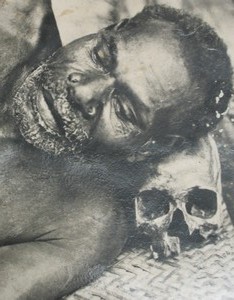
    Asmat cannibal tribe is the most famous of Papua. They put human skulls under their heads instead of a pillow. They feed on the brains of animals mixed with sago worms directly from your skull in half. They live in small islands of mangrove vegetation near the sea on the south side of the western part of the island of New Guinea. The construction of communal houses Asmat, they live together. Each family has its own fireplace reserved. In the longhouse, six or ten members of the band live.

    In addition, the Asmat were headhunters, but also "hunt for the names." Each person is called after someone has died, or after killing the enemy. The child was given a name sometimes up to ten years after its birth, and then left the village to kill his enemy in the vicinity of the village. They had to learn the name of the man he killed, and then brings her home village of the skull. Only in this way a person can have a name.

     
    Around Indonesia © 2011 | Designed by Interline Cruises, in collaboration with Interline Discounts, Travel Tips and Movie Tickets